

a magyar verzióért kattints ide
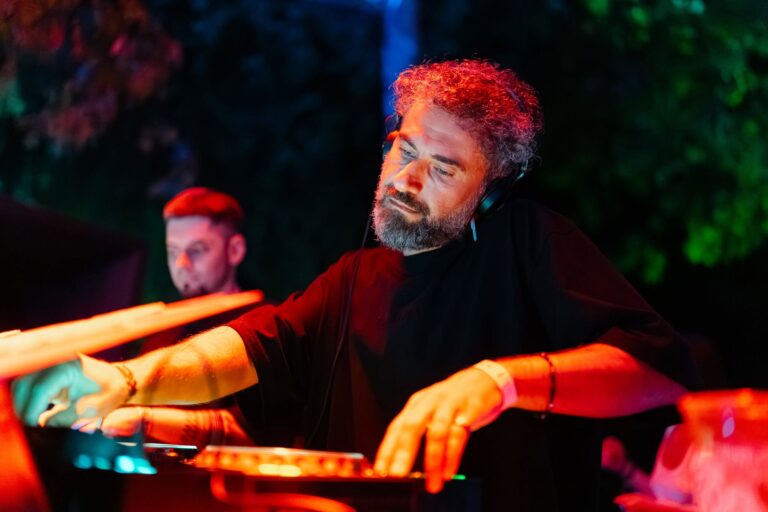
He grew up by the sea in Odessa; today he sends his records out into the world from Barcelona. Fedo’s music is full of friends’ voices, everyday moments and plenty of playfulness, and he has had his own story with the Hungarian crowd for years now: Juuz Records were the first to invite him over, last year he played a memorable b2b set with Silat Beksi at MicrOasis, and on July 18 he returns behind the decks in Budapest at the Fidull x Telum Open Air. We talked about moving, collecting sounds, and a sunrise where his mother was dancing next to him.
We last saw you at MicrOasis last summer. A year on, what’s the first image or moment that comes back from that weekend?
„The landscapes, the atmosphere, even the smell of the air felt strangely familiar and gave me a little sense of home.”
I still have very warm memories from last year’s festival. One of the first things that came back to me was how much the nature in Hungary reminded me of Ukraine. The landscapes, the atmosphere, even the smell of the air felt strangely familiar and gave me a little sense of home. As always, the festival was also technically excellent, which is something I really appreciate as an artist. And of course, it was great to see so many friends we’ve made over the years through music.
Your friendship with Silat Beksi goes way back, and life ended up putting you both in Barcelona. What has it been like to make the whole journey from Odessa side by side? And how much are you part of each other’s everyday life and music these days?
My friendship with Silat Beksi started around seven or eight years ago. It may not sound like a lifetime, but we’ve shared some very important years together. We both grew up in Odessa, a city by the sea, and those memories will always connect us. He moved to Barcelona first, and later I followed because I wanted to be closer to my friends. Many of our close Ukrainian friends eventually settled here too, so we’ve built our own little community. These days we see each other often, both through music and simply as friends.
Spanish titles keep popping up on your recent EPs: Sagrada, No Mañana, Bessame Mucho. Is Barcelona finding its way into the music? What has the city given you so far, in sound and in daily life?
Yes, Spain has definitely influenced me. Living in such a beautiful place with a different mentality and lifestyle naturally changes you. I love the sound of the Spanish language, which is why it sometimes appears in my track titles like Sagrada or No Mañana. Even my Instagram name changed from Fedo Music to Fedo Musica. Barcelona feels like my second home and reminds me of Odessa, just on a much bigger scale. My sound has evolved here, mostly because I’ve been able to spend so much time in the studio.
Anyone who listens through your releases meets a whole cast of people: Margo from Odessa, a jujutsu session on Ibiza, Mary Lim talking about living well. How do these voices end up in your tracks? Do you collect them, or do they find you?
„I just walk through life collecting them, like ripe apples from a tree.”
It all happens very naturally. Every sample has its own story. Sometimes I’m involved from the beginning, sometimes I simply hear something that inspires me. I think I just have a curious ear. I notice voices, sounds and little moments that have potential. I don’t really go looking for them—they somehow find me. I just walk through life collecting them, like ripe apples from a tree.
There’s a clear starting point to your Hungarian story: that first invite from Juuz Records. Since then your name has been on one of their records, and the circle of familiar faces grows every year. What was it like arriving as an outsider back then, and what’s it like now, coming back to a place that almost feels like home?
Meeting Juuz was a very positive moment for me. It introduced me to a scene that really inspired me, and working on music for the label also influenced my sound. Every time I come back to Hungary it feels more familiar. I get to see old friends, meet new people and I don’t feel like an outsider anymore. It feels like coming back to people I know.
You’re active as both a DJ and a producer. Do you think about music differently when you’re building a set than when you’re working on a track in the studio?
Both DJing and producing involve a lot of improvisation for me. I like to keep everything open, almost like a jam session. But sometimes one side gets in the way of the other. When I’m producing, I catch myself thinking like a DJ and imagining where a track would work best in a set. Sometimes that’s helpful, but sometimes I just want to let the music flow without any expectations. That’s usually when the most honest ideas appear.
When did you last dance through a whole party on a night you weren’t playing? A lot of DJs lose that side of things without noticing. Have you kept it?
Since music became my profession, I don’t get to experience parties as a guest very often. But I’ve never lost that love. I still enjoy standing in the sweet spot of the room, listening carefully and letting the music inspire me. If Silat Beksi is playing, I’ll happily go just to enjoy his set. And when I’m performing myself, I like arriving early to hear the other artists.
The last track of the night is its own art form. How do you choose it? Is there a closer you still remember to this day?
Honestly, there have been so many closing tracks over the years that I’ve stopped keeping count. I don’t really remember them anymore. For me it’s never about one specific record. It’s about the feeling people leave with. Every night tells its own story.
If you had to pick three of your own tracks for someone who has never heard you before, which ones would make the cut? And what would they say about you?
„There is one unreleased track that has a very special place in my heart, and maybe one day the time will be right for people to hear it.”
That’s a difficult question because I’m still very critical of my own music. I actually enjoy seeing how labels choose tracks from a bigger selection—they often hear connections that I wouldn’t notice myself. So picking only three tracks is hard. There is one unreleased track that has a very special place in my heart, and maybe one day the time will be right for people to hear it.
Years behind the decks add up to a lot of parties, faces and sunrises. Is there one moment you’d frame and put on the wall if you could? Where was it, what was playing, what made it stick?
If I could turn all the parties, sunrises and faces I’ve seen into one film, I think it would be a beautiful one. But if I had to frame just one memory, it would be a sunrise when my mother was dancing next to me. My friends were all around us, everyone was smiling, and I remember feeling genuinely happy in that moment.
„If I had to frame just one memory, it would be a sunrise when my mother was dancing next to me.”
Your music has always had a personal, playful side, while minimal around you keeps drifting towards a more popular, crowd-friendly sound. Where do you find yourself in that shift? Be honest with us: is it good for the scene, or is something important getting lost along the way?
I try not to define myself by trends. To be honest, I hardly listen to new music because I prefer to protect my own perspective. I understand why the scene changes—every generation has its own energy, and today’s young artists naturally shape the current sound. But I’m not worried about minimal. For me, it’s timeless. It was here before us, it’s here now, and it will always be here. I’d rather focus on making music that feels honest to me.
Fedo’s music is available on Bandcamp, and his Instagram is the place to follow for fresh news.
Thank you, Fedo, for the answers – see you on July 18!
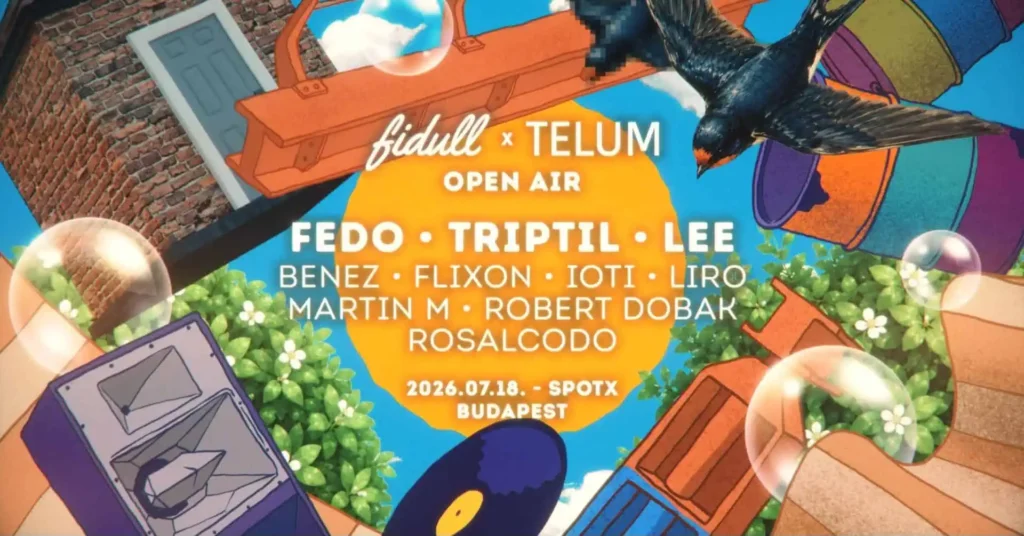
Fidull x Telum Open Air
July 18, 2026 | SPOTX, Budapest
Alongside Fedo, Telum founder Lee Clement and Triptil will also step behind the decks.